
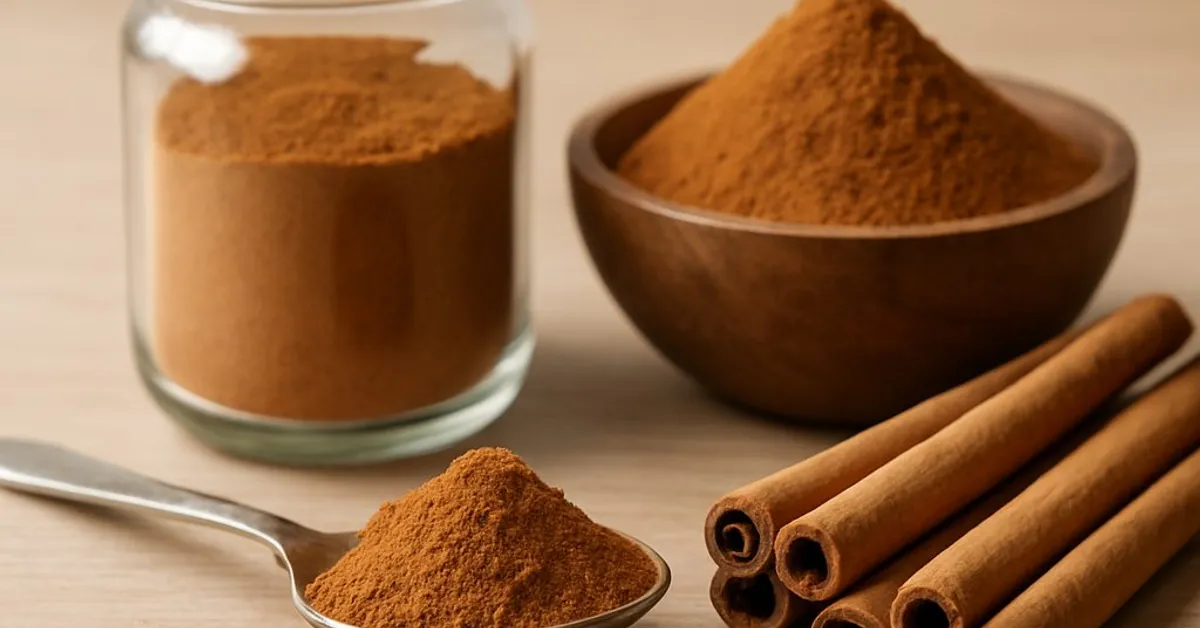
The dosage question matters more with cinnamon than with most supplements. Take too little and you probably will not notice much. Take too much of the wrong type and you are dealing with a coumarin toxicity concern that can damage your liver over time. The right answer depends on which type of cinnamon you are taking, what you are trying to accomplish, and how your body responds.
Disclosure: This post contains affiliate links. We may earn a commission if you purchase through our links, at no extra cost to you. We only recommend products we trust.
Here is the full picture based on what the clinical research actually used.
Ceylon vs Cassia: The Dosage Difference That Actually Matters
There are two main types of cinnamon sold as supplements: Ceylon (Cinnamomum verum) and Cassia (Cinnamomum cassia, also sold as “Vietnamese” or “Saigon” cinnamon). Most cinnamon at grocery stores and in cheap supplement capsules is Cassia. Most of the cinnamon that health researchers have studied for blood sugar effects is also Cassia – but that comes with a major caveat.
Cassia contains significant amounts of coumarin, a naturally occurring compound that can cause liver damage at high doses. The European Food Safety Authority set a tolerable daily intake of 0.1mg of coumarin per kilogram of body weight. Cassia cinnamon contains roughly 1-12mg of coumarin per gram of cinnamon depending on the source. For a 150-pound (68kg) person, that’s a tolerable limit of about 6.8mg of coumarin per day – which you can exceed with just 1-7 grams of Cassia depending on the batch.
Ceylon cinnamon contains only trace amounts of coumarin – roughly 100 to 1,000 times less than Cassia. This is why Ceylon is the appropriate choice for anyone taking cinnamon consistently at therapeutic doses over months or years.
The practical implication: with Ceylon, the standard research doses are safe for long-term daily use. With Cassia, you need to be more conservative.
What the Research Actually Used
Clinical trials on cinnamon and blood sugar have used a wide range of doses, but most fall in the 1-6g per day range. Here is a breakdown of what the key studies found:
- 1g/day: A landmark study published in Diabetes Care (2003) found that 1, 3, and 6 grams of Cassia cinnamon all produced significant reductions in fasting blood glucose, LDL cholesterol, and triglycerides in type 2 diabetic patients after 40 days. The 1g dose worked nearly as well as the 6g dose in most markers.
- 2g/day: Multiple studies using 2g of Ceylon cinnamon daily showed improvements in fasting blood sugar in people with type 2 diabetes and prediabetes over 8-12 weeks.
- 3g/day: A 2016 systematic review in the Journal of the Academy of Nutrition and Dietetics found that doses of 1-6g/day consistently reduced fasting blood glucose, with 3g appearing in several of the better-designed trials.
- 6g/day: Some studies used up to 6g daily without adverse effects when using Ceylon. With Cassia, this dose raises the coumarin concern significantly.
The takeaway from the research: 1-3g of Ceylon cinnamon per day is the sweet spot that shows real effects at doses that are safe for long-term use. If you are using Cassia, stick to 1g or less per day and consider switching to Ceylon if you plan to supplement consistently.
How to Take Cinnamon for Best Results
With Meals or Without?
Most studies that showed blood sugar benefits used cinnamon with meals, not on an empty stomach. The mechanism makes sense: cinnamon slows carbohydrate digestion by inhibiting digestive enzymes (alpha-glucosidase and alpha-amylase), which blunts the post-meal blood sugar spike. For this effect to work, the cinnamon needs to be present in your gut when the carbohydrates are being broken down.
Take your cinnamon dose with your largest carbohydrate-containing meal of the day. If you are splitting the dose, take half with breakfast and half with dinner.
Morning vs Evening
There is no strong evidence that timing within the day makes a large difference, but morning dosing has practical advantages – you are less likely to forget it, and it can be part of a consistent routine. Some people find that taking it in the morning with breakfast helps with energy levels and appetite throughout the day, though this is more anecdotal than well-studied.
If your primary goal is post-meal blood sugar management, time it around whichever meal tends to spike your glucose the most. For most people, that is lunch or dinner rather than breakfast.
What Form Should You Take?
Capsules
Capsules are the most practical form for consistent daily dosing. You know exactly how much you are getting, there is no taste issue, and the dose is easy to adjust. Look for capsules that clearly state “Ceylon cinnamon” (Cinnamomum verum) on the label and list the mg per serving. Most 600mg capsules mean two capsules get you to the 1-2g range that research supports.
Me First Living’s Organic Ceylon Cinnamon or also on Amazon is USDA certified organic and clearly labeled as true Ceylon – a clean option if you want something reliable without fillers or mystery blends.
Powder
Cinnamon powder added to food or drinks works fine if you are consistent about measuring. One level teaspoon of ground cinnamon is roughly 2.6g. The challenge with powder is that Cassia is far more common at grocery stores – if you are buying powder to dose therapeutically, make sure the label specifically says Ceylon or Cinnamomum verum. If it just says “cinnamon,” assume it is Cassia.
Powder in smoothies, oatmeal, or yogurt is an easy way to get your dose with breakfast without thinking about it too hard. Just measure consistently rather than eyeballing.
Tea
Cinnamon tea made from Ceylon sticks can be pleasant and does provide some cinnamon compounds, but the concentration is lower and harder to standardize than capsules or measured powder. Studies using cinnamon tea have generally shown smaller effects than capsule-based trials. Tea is fine as a complement to your routine, but probably not sufficient as your primary delivery method if you have specific health goals.
Signs You Are Taking Too Much
Cinnamon is generally well-tolerated at research doses when using Ceylon, but there are signals that you may be overdoing it or using the wrong type:
- Mouth or lip irritation: Cinnamon contains cinnamaldehyde, which can cause contact stomatitis (irritation of the mouth lining) in sensitive individuals or at high doses. If you notice your lips, tongue, or gums becoming irritated, reduce your dose.
- Digestive upset: Nausea, diarrhea, or stomach cramping at higher doses. Taking it with food rather than on an empty stomach usually resolves this.
- Low blood sugar symptoms: If you are on diabetes medication and also taking cinnamon, the combined effect on blood sugar can push glucose too low. Symptoms include shakiness, dizziness, sweating, and confusion. This is worth monitoring closely, especially in the first few weeks.
- Elevated liver enzymes: This is the coumarin concern specific to high-dose Cassia use. If you are using Cassia cinnamon at doses above 2g/day regularly and your doctor runs a liver panel, watch for elevated ALT/AST. The solution is to switch to Ceylon, not to give up cinnamon entirely.
Most healthy adults using 1-3g of Ceylon cinnamon daily will not experience any of these issues. The risk profile is much more forgiving with Ceylon than with Cassia.
Putting It All Together
If you want a simple, practical protocol based on what the research supports:
- Use Ceylon cinnamon (Cinnamomum verum), not Cassia
- Start with 1g per day (roughly two 500mg capsules) and see how you respond
- Work up to 2-3g per day if you are targeting blood sugar or metabolic benefits
- Take it with meals, especially carbohydrate-heavy ones
- Give it at least 8 weeks before evaluating results – most studies ran 8-12 weeks
- Tell your doctor if you are on any medication that affects blood sugar or the liver
The dosage window where cinnamon is both effective and safe long-term is clear: 1-3g of Ceylon per day, taken with food. That is the range backed by the best clinical evidence, without the coumarin exposure that makes high-dose Cassia problematic over time.
For a well-sourced Ceylon option, Me First Living’s Organic Ceylon Cinnamon is USDA certified organic, clearly labeled, and consistently dosed – exactly what you want if you are going to be taking this daily for months.