
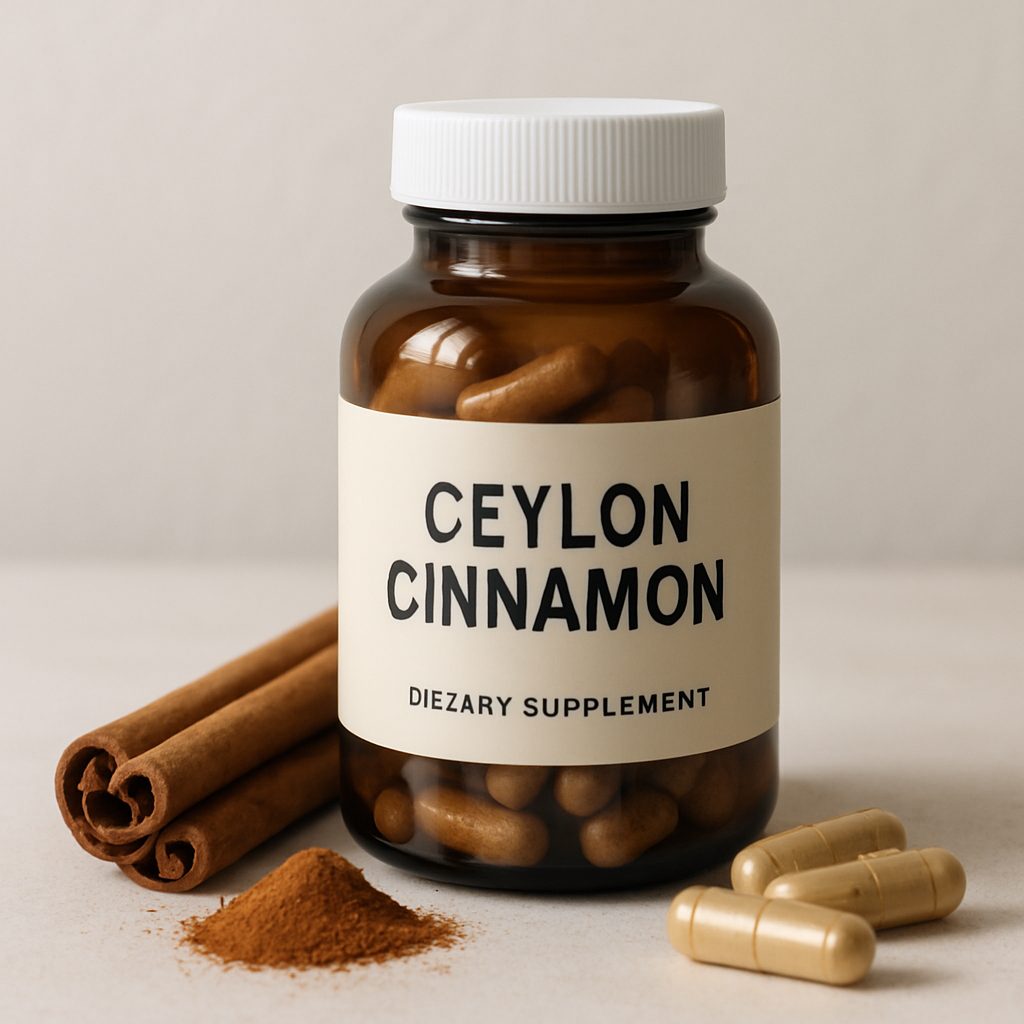
Ceylon cinnamon has one of the cleaner safety profiles of any blood sugar-related supplement. The distinction from Cassia cinnamon is important here: the safety concerns people associate with cinnamon supplements mostly apply to the Cassia variety, not Ceylon. That said, there are specific situations where caution is warranted.
Why Ceylon Cinnamon Is Safe at Supplement Doses
The primary safety issue with cinnamon supplements is coumarin, a compound found in large amounts in Cassia cinnamon (1 to 12 mg per gram) and in negligible amounts in Ceylon cinnamon (0.004 mg per gram). The European Food Safety Authority identified coumarin as potentially hepatotoxic at high doses and set a tolerable daily intake of 0.1 mg per kilogram of body weight.
At 2,000 mg per day of Ceylon cinnamon, coumarin intake is approximately 0.008 mg total, well under any concern threshold. The coumarin issue simply does not apply to Ceylon at standard supplement doses.
Outside of coumarin, Ceylon cinnamon’s active compounds, including cinnamaldehyde, polyphenols, and procyanidins, have been studied extensively and are well-tolerated in the doses used in clinical trials (1,000 to 6,000 mg per day). No significant organ toxicity has been identified at these doses for Ceylon specifically.
Common Side Effects at Normal Doses
Most people taking 1,000 to 2,000 mg of Ceylon cinnamon per day report no side effects. The most commonly mentioned minor effects are:
- Mild GI discomfort: Some people experience minor stomach upset or heartburn, particularly when taking cinnamon on an empty stomach. Taking it with food resolves this in most cases.
- Mouth irritation: Cinnamaldehyde can irritate oral tissues at high concentrations. This is more relevant for cinnamon oil or chewing on cinnamon sticks than for encapsulated supplements.
- Blood sugar going too low: This is only a risk if you are already on blood sugar-lowering medication. The additive effect can push glucose lower than expected.
Who Should Be Careful: Blood Thinners
Cinnamon has mild anticoagulant properties, primarily through coumarin derivatives and cinnamaldehyde’s effects on platelet aggregation. For most people, this is not clinically significant. For people on anticoagulant medications, specifically warfarin (Coumadin), the interaction can matter.
If you take warfarin or any blood thinner, consult your doctor before starting cinnamon supplementation. Your INR (blood clotting time) may need monitoring when adding or removing cinnamon from your routine.
Who Should Be Careful: Liver Conditions
Ceylon cinnamon is not known to cause liver problems. However, people with pre-existing liver conditions should use any supplement conservatively. While the coumarin levels in Ceylon are too low to be a realistic concern, people with compromised liver function should discuss supplementation with their doctor and start at the lower end of the dosage range (500 to 1,000 mg per day).
People with liver conditions should specifically avoid Cassia cinnamon supplements, where the coumarin risk is real and relevant.
Who Should Be Careful: Pregnancy
High doses of cinnamon have historically been used to stimulate uterine contractions in folk medicine, which raises concern about high-dose supplementation during pregnancy. The research specifically on Ceylon cinnamon in pregnancy is limited, but the general recommendation is to avoid supplement-level doses (above 500 mg per day) during pregnancy.
Using cinnamon in normal food amounts during pregnancy is generally considered safe. It is supplement-level doses that are not recommended during pregnancy.
Drug Interactions
Three main interaction categories to be aware of:
Blood sugar medications: Cinnamon lowers blood glucose. Combined with insulin, metformin, sulfonylureas, or other antidiabetic drugs, the blood sugar-lowering effect can compound. Monitor glucose carefully and discuss with your doctor if you are on antidiabetic medication.
Blood thinners: As noted, cinnamon has mild anticoagulant properties. This is most relevant with warfarin but worth mentioning with aspirin or other antiplatelet agents at high doses of cinnamon.
Liver-metabolized medications: Ceylon cinnamon at standard doses is not a significant inhibitor of cytochrome P450 enzymes, which are responsible for metabolizing most drugs. This is more of a theoretical concern at very high doses than a practical one at 1,000 to 2,000 mg per day.
Allergy Considerations
Cinnamon allergy is uncommon but real. Contact dermatitis from cinnamon (cinnamaldehyde) is well-documented, typically from cinnamon-flavored products like gum, toothpaste, or topical applications. Systemic allergic reactions from oral supplementation are rare.
If you know you are sensitive to cinnamon-flavored products or have had skin reactions to cinnamon-containing cosmetics, approach supplementation cautiously and start with a low dose.
The Bottom Line on Safety
Ceylon cinnamon is among the safer options in the metabolic health supplement category. The coumarin concerns that apply to Cassia simply do not translate to Ceylon at any reasonable dose. For healthy adults without the specific risk factors mentioned above, 1,000 to 2,000 mg of Ceylon cinnamon per day carries no meaningful safety concern based on the available evidence. If you want to learn more about the advantages of Ceylon cinnamon, check out its health benefits.
If you are evaluating supplement options and want to understand what to look for in a quality Ceylon cinnamon product, see our best Ceylon cinnamon supplement guide.